Why Your Shoulder Aches After Puppy Walks but Never After a Run
Quick Answer: A running dog applies unpredictable, one-sided pulling forces to a single shoulder and grip while you walk at low intensity. Your body is far better at handling large symmetrical loads than small asymmetric ones, and the involuntary bracing against sudden pulls loads your shoulder, neck, and grip continuously. A hands-free waist lead or a front-clip harness moves the force to your hips and torso, which are built to handle it.
A long run leaves you tired and even. Forty minutes with a young dog leaves one shoulder, one side of your neck, and one hand quietly complaining.
This blog has covered why puppy walks are not the workout they feel like and why dog walking is not the recovery walk you think. The asymmetry is the piece that turns a pleasant walk into an actual physical problem.
Why is a small one-sided load worse than a big even one?
Because your body compensates for asymmetry with muscles that were not designed to hold position for an hour.
Running is symmetrical and rhythmic. Both sides do the same work in the same pattern, and the loading is predictable, so your body settles into an efficient cycle.
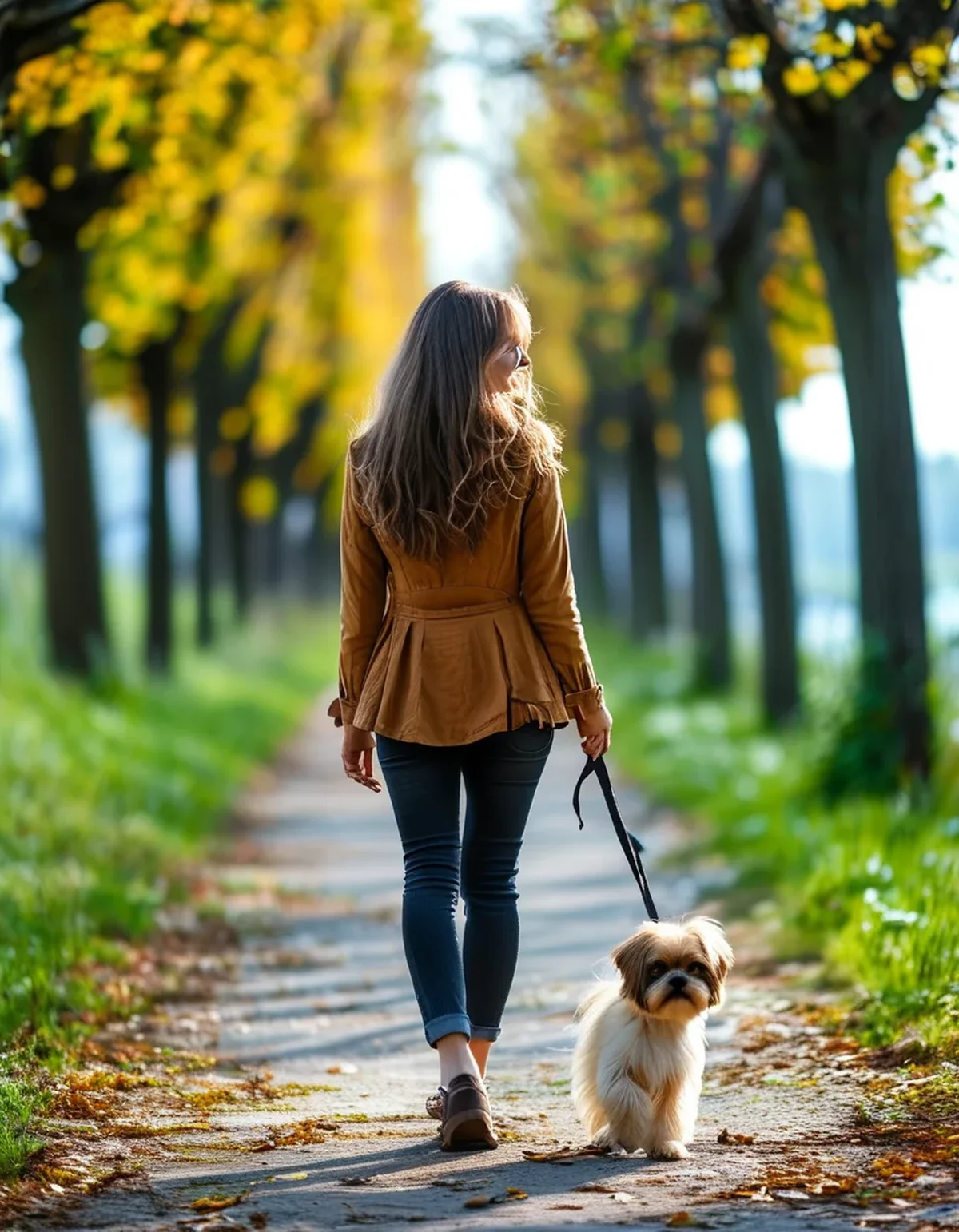
A lead applies force to one hand at unpredictable moments. Every lunge toward a squirrel produces a sudden pull that you resist reflexively, usually with your shoulder and neck rather than your legs.
Anticipation is as costly as the pulls themselves. After a few surprises, you walk with a slightly braced arm and elevated shoulder, holding low-level tension continuously. Forty minutes of that is a long isometric hold nobody planned.
Your torso rotates and side-bends to compensate. Holding a load on one side shifts your whole posture, and the muscles along one side of your spine work continuously to keep you upright and straight.
Grip is under constant low-level demand. Gripping a lead for the whole walk, tightening sharply at intervals, fatigues the forearm in a way nothing about a run does.
And the intensity is low enough that you never notice. During a hard effort you monitor how your body feels. On a pleasant walk you are looking at the dog and the trees, and the accumulating tension goes unregistered until you are home.
What actually fixes it?
Changing where the force goes, which is a kit problem rather than a technique problem.
A hands-free waist lead is the single biggest change. It transfers pulling force to your hips and core, which are far better equipped to absorb it, and it frees your arms to swing naturally. For running with a dog it is close to essential.
A front-clip harness reduces the force at the source. Clipping at the chest means a pulling dog turns toward you rather than dragging forward, which cuts the peak force substantially and is also better training.
Swap hands regularly if you use a hand-held lead. Every five minutes, deliberately. Most people hold the lead in the same hand for years without noticing.
Use a lead with some elasticity. A bungee section absorbs the sharp peak of a lunge, which is the part that causes the reflexive bracing. It is a small change with a disproportionate effect.
Keep the lead shorter with a young dog. A long lead gives the dog room to build speed before hitting the end, which multiplies the impact force. Short and loose beats long and occasionally snapping tight.
And address the pulling itself, because kit is a workaround. Loose-lead training is the actual solution and it takes weeks. In the meantime, the harness and waist lead protect you while you work on it.
If you have existing shoulder or neck problems, the hands-free setup is worth adopting from day one rather than after it starts hurting. This is general information, not medical advice, and persistent pain deserves a professional look.
How do you make the walk count as exercise?
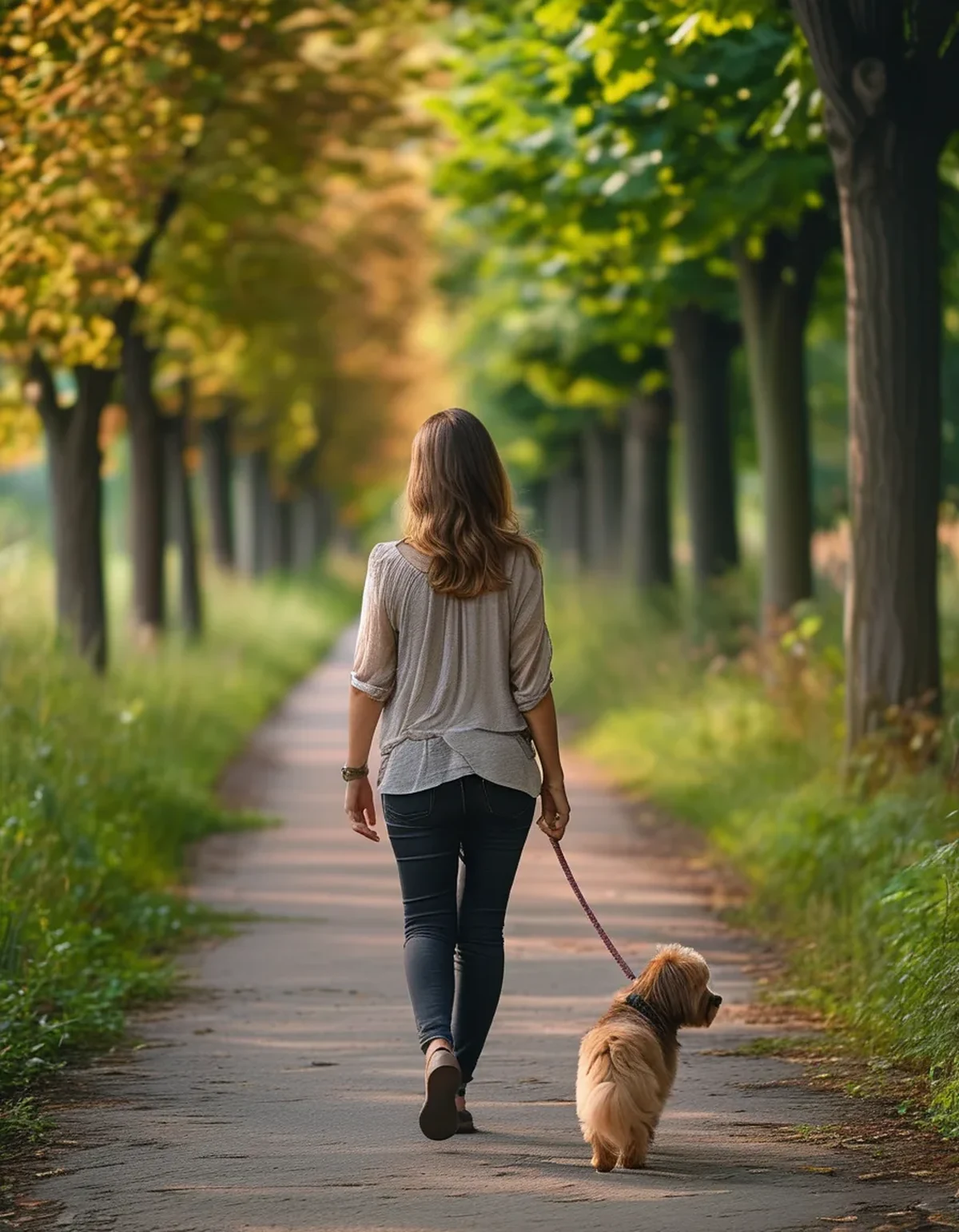
By separating the dog’s walk from your workout, or by deliberately changing the structure.
Accept that a puppy walk is not cardio. Stop-start walking at a young dog’s pace keeps your heart rate low and interrupted. This is a topic this blog has covered in its own right, and the honest answer is that it is enjoyable movement rather than training.
Add intervals within the walk. Two or three minutes of brisk pace where the dog is happy to move, alternated with sniffing stops, at least creates some variation. Use the dog’s natural rhythm rather than fighting it.
Use the stops rather than standing still. While the dog investigates something for two minutes, do calf raises, a set of squats, or a wall push. It looks slightly odd and it converts dead time into something.
Do a separate 20-minute walk without the dog if the goal is genuinely cardiovascular. Uninterrupted brisk walking at your own pace is a completely different activity from accompanying a dog, and it is worth doing separately rather than hoping one covers both.
Carry nothing on one shoulder. A cross-body bag or a small backpack instead of a shoulder bag removes a second source of one-sided load, which stacks with the lead if you are not careful.
And do the reverse walk occasionally. If your route always turns the same way, or the dog always walks on the same side, you are reinforcing an asymmetry every single day. Alternating sides costs nothing.
5 Mistakes Dog Owners Make With Their Own Bodies
1. Holding the lead in the same hand every walk, for years. This is the root of most one-sided dog-walking pain and it is trivially fixable.
2. Wrapping the lead around the hand or wrist. It feels secure and it removes your ability to release, which turns a sudden lunge into a force your body has to absorb entirely. It is also a genuine injury risk for fingers and wrists.
3. Using a back-clip harness on a pulling dog. Clipping at the back gives the dog the best possible leverage to pull, which is the opposite of what you want. Front-clip for pullers.
4. Treating the walk as recovery on a rest day. An hour of braced one-sided walking is not restorative, and the neck and shoulder tension it creates can be more than an easy jog would produce.
5. Bending from the waist for pick-ups and toy throws. Dozens of times a day, every day. Bending at the hips and knees instead is the same movement done in a way your lower back tolerates indefinitely.
And one people never connect: throwing a ball or a launcher repeatedly is a high-speed overhead motion with one arm, done cold, dozens of times. It is genuinely a common source of shoulder and elbow trouble in dog owners, and alternating arms or warming up first makes a real difference.
FAQ: Dog Walking and Your Body, Answered
Why does my shoulder hurt after walking my dog?
A lead applies unpredictable one-sided force, and you brace against it continuously with your shoulder and neck. Small asymmetric loads held for an hour cause more trouble than large symmetrical ones.
What is the best setup for a dog that pulls?
A front-clip harness plus a hands-free waist lead. The harness reduces the force at the source and the waist lead transfers what remains to your hips instead of your shoulder.
Does walking the dog count as a workout?
Rarely, with a young dog. Stop-start walking keeps your heart rate low and interrupted. It is valuable movement, and if cardiovascular fitness is the goal, a separate uninterrupted brisk walk does the job better.
TL;DR:
- One-sided unpredictable loads are harder on your body than large symmetrical ones, because you brace continuously against them.
- A hands-free waist lead moves the force to your hips, and a front-clip harness reduces it at the source.
- Swap hands every five minutes, never wrap the lead around your hand, and use a lead with some elasticity.
- A puppy walk is enjoyable movement rather than cardio. Do a separate uninterrupted walk if fitness is the goal.
If one shoulder is always the sore one, check which hand holds the lead. That is usually the entire explanation.
Keep Reading
This article is for general informational and styling purposes only. Fit, sizing, and product availability may vary.