Why Does Your Puppy Walk Route Matter More Than the Distance?
Quick Answer: Distance measures how far you went, not what your body did. A route with continuous movement, gentle inclines, and varied surfaces gives you a genuine training stimulus. A route with frequent full stops for sniffing gives your puppy far more mental value and gives you almost no cardiovascular one. Pick the route by what you want out of the walk, and run two different routes rather than one compromise.
You walked 3km with the puppy. Your watch is pleased.
Your heart rate averaged 92 and you stopped eleven times.
That was a good dog walk and it was not a workout, and both of those things are fine — as long as you know which one you did.
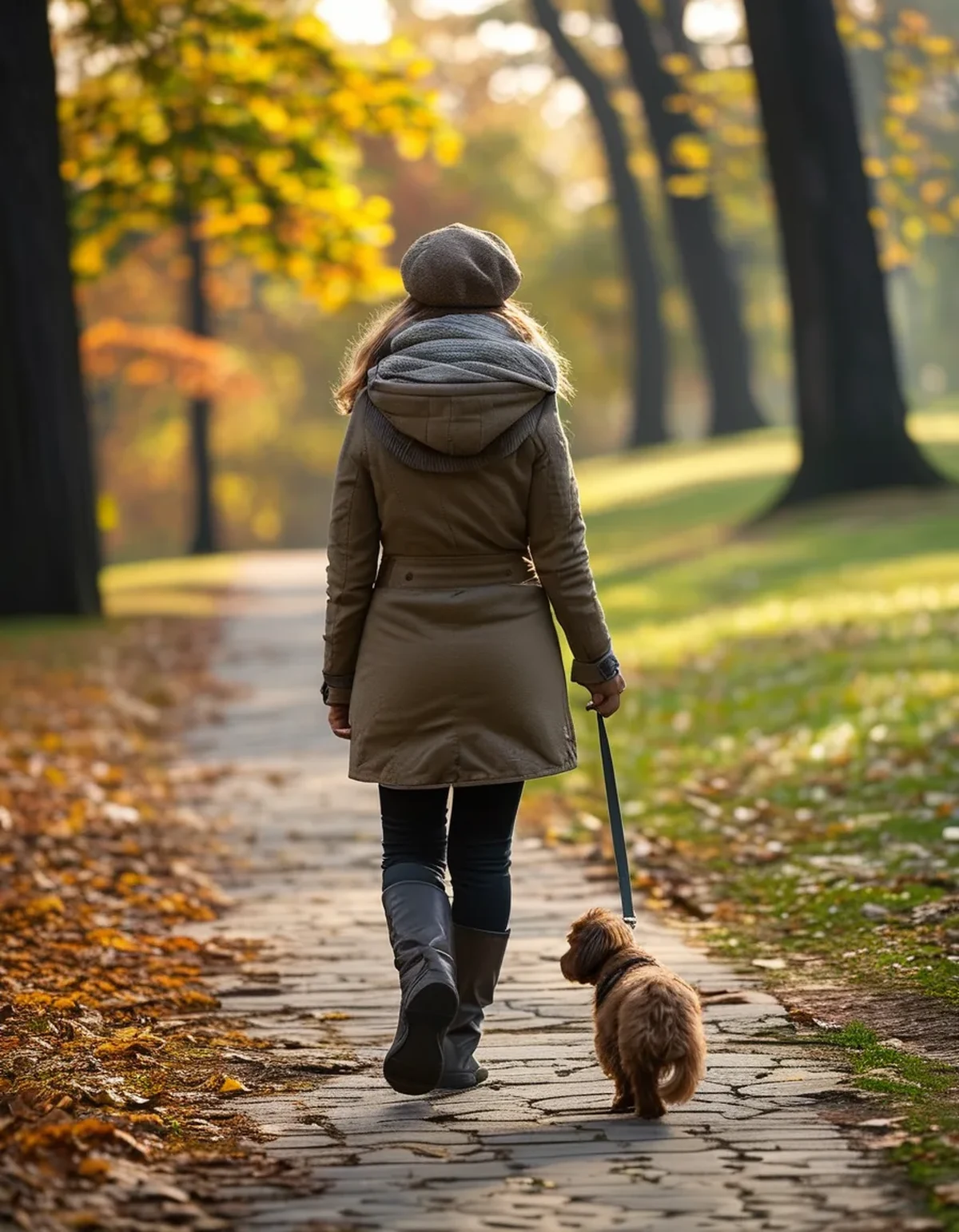
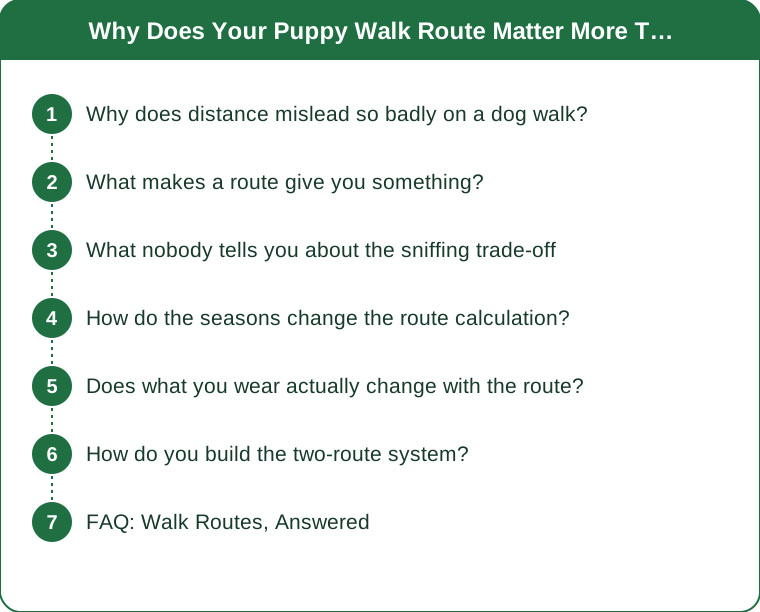
Why does distance mislead so badly on a dog walk?
Because distance assumes continuous movement, and a puppy walk is almost never continuous.
A typical young dog walk includes stopping to sniff, stopping to greet, stopping because something interesting happened, and stopping because you asked for a sit. Those stops can easily add up to a third of the total elapsed time.
For your body, that changes everything. Cardiovascular adaptation depends on sustaining an elevated heart rate, and every stop drops you back toward baseline. Ten stops in thirty minutes means you never spend long enough above threshold for the walk to count as training.
Meanwhile your watch happily records 3km and a respectable step count, so the feedback tells you that you trained.
The distance was real. The stimulus was not. That gap is why so many people walking a dog for an hour a day see no fitness change and quietly conclude that walking does not work.
What makes a route give you something?
Three features, in order of impact.
Continuity. The single biggest factor. A route where your dog can move without constant new sniff triggers keeps you moving too. Familiar routes are better than novel ones here, which is the opposite of what your dog wants — more on that tension below.
Gradient. A 5 percent incline roughly doubles the metabolic cost of walking at the same speed. A route with even one moderate hill turns a stroll into something with a training effect, and it does so without requiring you to walk faster than your dog wants to.
Surface variety. Grass, trail, and sand demand more stabilizing work than pavement. This is small per step and meaningful over an hour.
What is not on the list: distance and speed. Both are largely dictated by your dog, and trying to control them is how dog walks turn into a source of friction. Gradient and surface are things you choose once when you pick the route, and then you stop negotiating.
What nobody tells you about the sniffing trade-off
Here is the awkward part that most dog fitness content avoids: the walk that is best for your dog’s brain is the worst one for your heart rate.
Sniffing is genuinely important. It is a puppy’s primary way of processing the world, and a good sniff-heavy walk does more for a young dog’s mental state and evening settling than a longer brisk one. Decompression walks on a long line are not indulgence, they are legitimate enrichment.
But they involve stopping every forty seconds, and that is not exercise for you.
Trying to get both from one walk produces a compromise that serves neither — you feel impatient, the dog feels rushed, and neither of you gets the thing you needed.
The fix is to split them. Run two different walk types:
- The sniff walk: long line, slow, your dog leads, no route agenda. Your job is patience.
- The moving walk: shorter line, structured, a route you chose for gradient, dog at your pace with clear expectations.
Most people find one of each per day works better than two hybrids, and the dog’s behaviour on the structured walk improves once the sniffing need is being met elsewhere.
How do the seasons change the route calculation?
Late summer into autumn is the best walking window of the year, and it also changes what your routes should be.
Cooler mornings mean your dog can sustain more. Summer heat caps a puppy’s tolerance well below yours, so summer routes tend to be short and shaded regardless of what you wanted. That constraint lifts in September, and the structured walk suddenly becomes viable.
Daylight shrinks from both ends. The evening walk moves into dusk and then dark. That pushes people toward lit pavement loops, which are exactly the low-gradient, low-variety routes with the least training value. If you have one hill route, use it in the morning while the light lasts.
Surfaces change. Wet leaves, mud, and softer ground add stability demand — good for you, and worth a check on your footwear. Trail becomes slippery earlier in the autumn than most people expect.
Your dog’s energy goes up. Cooler weather makes most dogs noticeably more energetic, which is a gift for the structured walk and a challenge for loose-lead work. Expect to need a couple of weeks of re-establishing pace expectations.
Does what you wear actually change with the route?
Yes, and it changes more between route types than between seasons.
For the sniff walk: you are standing still a lot, which means you cool down. Layer more than you would for a continuous walk of the same length, and prioritize pockets — treats, bags, a phone, and a long line all need somewhere to live. Something that handles being stood on damp grass without soaking through matters more than breathability.
For the structured walk: you will actually warm up, so layer less and expect to shed. Breathability matters here. So does a waistband that stays put when you are moving briskly with a dog occasionally pulling sideways.
For both: shoes with real grip. Dog walks involve unpredictable lateral pulls on unpredictable surfaces, and a smooth-soled trainer on wet leaves is the most common way people get hurt on a walk.
And pockets over layers, always. This is the one piece of dog walk gear advice that people underrate every single time. A jacket with two secure zip pockets changes the walk more than a technical fabric does.
How do you build the two-route system?
It takes one afternoon to set up and then runs itself.
Map two routes. Walk your neighborhood once with the specific goal of finding the most continuous stretch and the best gradient within fifteen minutes of home. That is your structured route. Then find the most interesting, varied, sniff-rich space you can reach — that is your decompression route.
Assign them to times, not to moods. Morning structured, evening sniff, or whatever fits your schedule. If you decide in the moment, you will pick the sniff walk every time, because it requires less of you.
Measure the structured one honestly. Time it rather than measuring distance. If the same route takes 22 minutes some days and 34 others, the difference is stops, and stops are what you were trying to remove.
Let the sniff walk be genuinely unmeasured. No pace target, no distance goal. It is not for you, and trying to make it partly for you is what ruins it.
After two weeks most people report the same two things: the structured walk actually feels like exercise, and the dog is calmer in the evenings. Those are the two outcomes the single compromise walk was failing to deliver.
FAQ: Walk Routes, Answered
Is my puppy old enough for a structured walk?
Young puppies have growth plate considerations and should not be doing sustained forced exercise. The common guidance is to build duration gradually and let a young dog set the pace. Your vet’s advice on your specific breed and age beats any general rule here.
What if I only have time for one walk?
Alternate days rather than compromising every day. A sniff walk Monday and a structured walk Tuesday serves both purposes better than two half-versions.
Does a treadmill or a stroller walk count?
For you, a treadmill counts. For the dog, neither replaces outdoor sniffing, which is the part that does the mental work. They solve different halves of the problem.
My dog pulls constantly. Does that count as resistance training?
Not in a useful way. Constant pulling loads one side asymmetrically, which is the most common source of the one-sided shoulder and neck soreness dog owners report. Training the pulling is a better answer than reframing it as exercise.
TL;DR:
- Distance on a dog walk measures how far you went, not whether you trained — frequent stops keep your heart rate below any useful threshold.
- Route quality comes from continuity, gradient, and surface variety, not from length or speed.
- The best walk for your dog’s brain is the worst one for your heart rate, so split them into a sniff walk and a structured walk rather than compromising.
- Cooler autumn mornings make the structured walk viable again after a summer of heat limits, but shrinking daylight pushes evening walks onto flat lit pavement.
- Pockets and grippy shoes matter more than fabric on both route types.
Set up two routes this weekend and assign them to fixed times. It costs one afternoon of exploring, and it turns an hour a day that was doing very little for either of you into an hour that does two distinct jobs properly.
Keep Reading
This article is for general informational and styling purposes only. Fit, sizing, and product availability may vary.