What Switching to a Long Line Does to Your Own Walk
Quick Answer: A long line moves your walk from a fixed-pace march to a variable-pace, variable-terrain wander with frequent stops. That is worse for a steady cardio effort and better for ankle stability, step count, and the dog. It also changes what you should be wearing — pockets and grip matter more, layers matter more, and a short leash’s arm position disappears entirely.
The dog gets fifteen feet of freedom and you get something you did not expect.
Your walk stops being a straight line and starts being intervals across uneven ground.
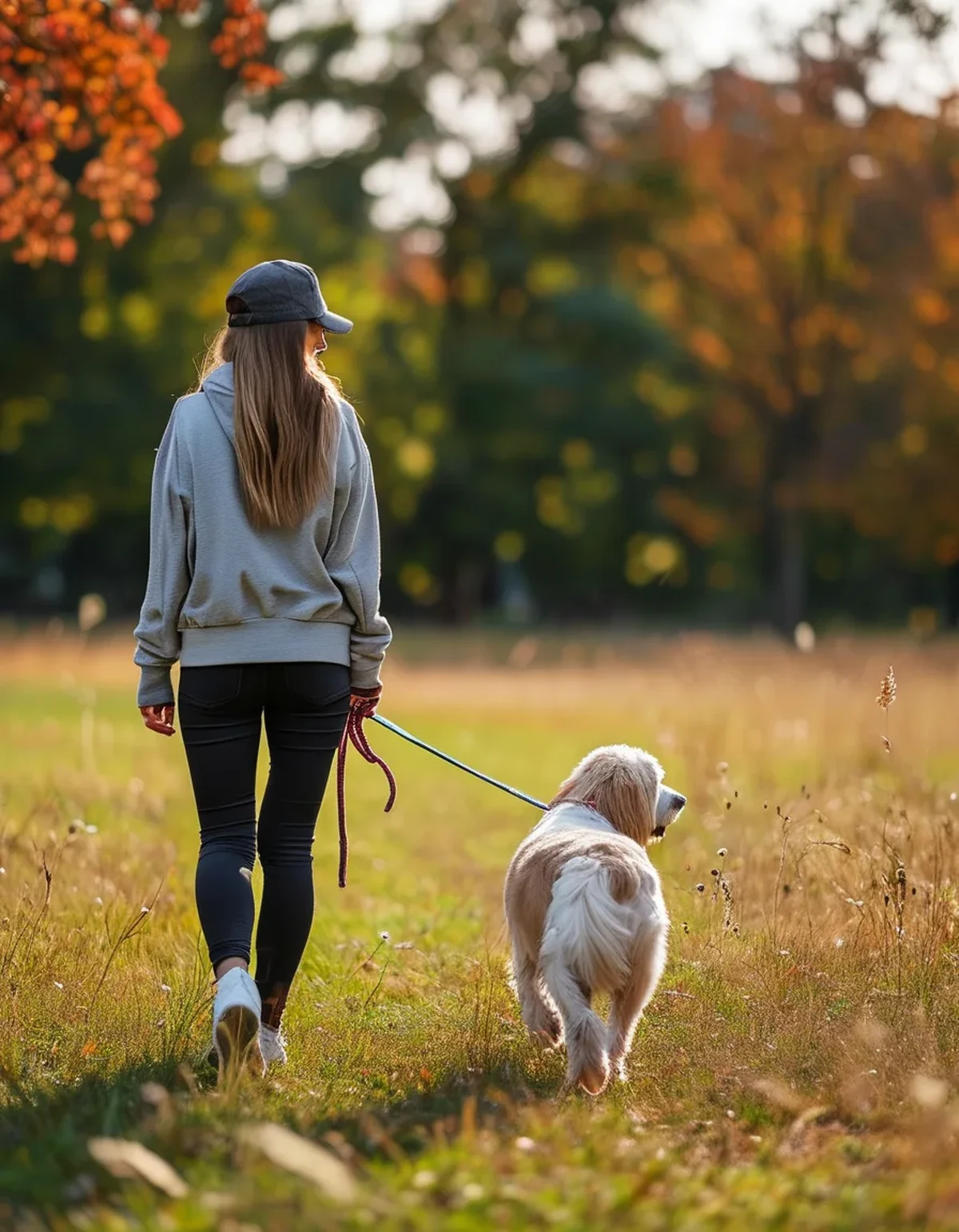
How does a long line change your own movement?
It removes the fixed pace and adds terrain variation, which changes almost everything.
Your pace becomes intermittent. Instead of a steady march at the dog’s speed, you get walk-stop-walk with the occasional quick few steps to manage slack. Cardiovascularly that is a lower average effort than a brisk short-leash walk, with a higher peak.
The terrain gets more varied. Long lines are used in open ground — fields, park edges, trails. Uneven surfaces engage the small stabilizers around your ankles and hips in a way a sidewalk does not, and that is a genuine benefit rather than a consolation.
Arm position changes completely. Short-leash walking often means a semi-braced arm holding tension for the full walk, which is why one shoulder aches afterward. A long line is mostly slack, so the load becomes intermittent and much lighter overall.
You manage line rather than resist pulling. Gathering and feeding out line is a low-level hand and forearm task done continuously. Different from bracing, and much easier on the shoulder.
Step count usually rises, average heart rate usually falls. More distance covered as you follow a wandering dog, less sustained effort. Which one matters depends on what the walk was for.
What should you wear differently?
The gear priorities reverse from a short-leash walk.
Grip becomes the priority over cushioning. Wet grass, leaf litter, and uneven ground in autumn make traction more valuable than road-running cushioning. A trail-oriented shoe is a real upgrade here.
Pockets have to actually close. A long line means bending, crouching, and turning, all of which empty open pockets. Zip pockets stop being a nice feature and become a requirement.
Gloves, earlier in the season than you would think. Managing line with cold hands is unpleasant and clumsy, and line burn on a bare hand from a sudden lunge is a genuine hazard. A thin liner glove from the first cool mornings is worth it.
Layers you can shed while holding a line one-handed. Anything requiring two hands and a full stop to remove will stay on and you will overheat. A zip front beats a pullover for exactly this reason.
Long trousers over cropped, in tall grass. Ticks remain active well into autumn in most regions, and long grass is where long lines lead. Not a style point, a practical one.
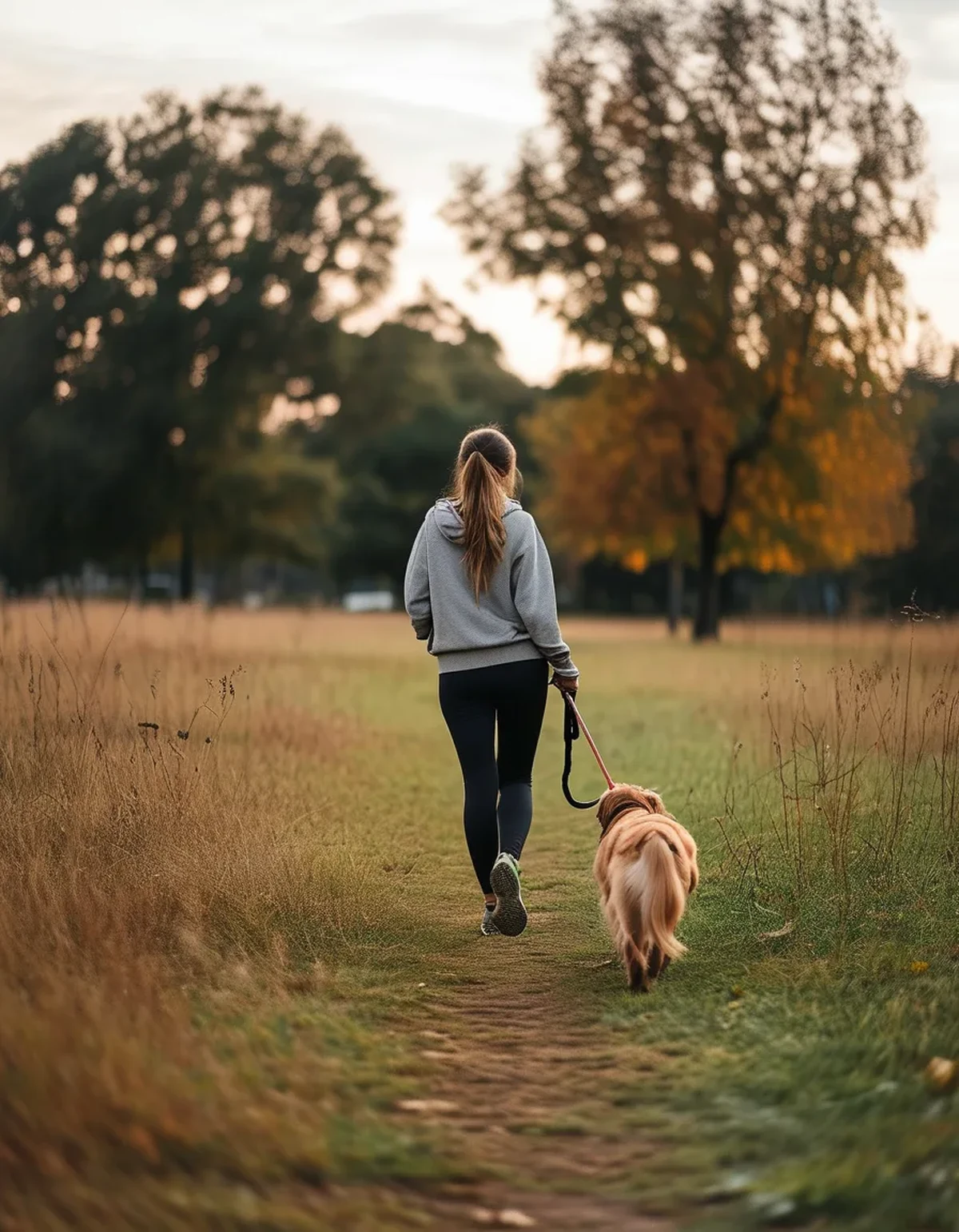
What Nobody Tells You About Long Line Walks
Your dominant hand does most of the work and it accumulates. Managing line for 40 minutes is a repetitive forearm task. Swapping hands every ten minutes is worth doing before you notice why.
Watching your dog means not watching your feet. Most stumbles on long line walks happen while looking away at a dog thirty feet off. Uneven autumn ground with leaf cover hides holes, and this is the actual injury risk of the activity.
You will walk further than you plan. Following a wandering dog adds distance without it feeling like more effort. Plenty of people find long line walks are their longest walks of the week by distance and their easiest by perceived effort.
The line gets filthy and so do you. A 15-foot biothane line dragged through wet grass transfers everything it collects onto your legs. Biothane wipes clean; nylon holds water and mud all week.
The dog’s recall training benefits far more than your fitness does. That is the honest ranking. Treat the long line walk as the dog’s session and the movement as a bonus, and the whole thing makes more sense.
How do you get a workout out of it?
Add the intensity deliberately, since the format will not add it for you.
Use the dog’s stops as intervals. When the dog stops to investigate, do something — calf raises, a set of squats, a walking lunge back and forth on the length of the line. The stops are frequent and predictable.
Cover ground while the dog is stationary. Walking a wide arc around a sniffing dog keeps you moving through what would otherwise be dead time and keeps the line from tangling.
Choose terrain deliberately. A slope covered twice is a different session than a flat field. The dog does not mind and your legs will notice.
Separate the walks if fitness is the goal. A long line session for the dog and a brisk 25-minute walk for you produce better outcomes than trying to make one walk do both jobs. This is the honest answer even though it costs more time.
Finish with a short brisk leg on a normal leash. Ten minutes of steady pace at the end gets you the cardiovascular portion without shortening the dog’s session.
FAQ: Long Line Walks, Answered
Is a long line walk a real workout?
For step count and ankle stability, yes. For cardiovascular training, generally no — the intermittent pace keeps average heart rate well below what a steady brisk walk produces. It is genuinely good movement and a poor substitute for a deliberate cardio session.
What length line is manageable?
Fifteen to twenty feet is the usual practical range. Thirty-foot lines give the dog more freedom and are considerably harder to manage without tangling, which puts most of the extra effort on you rather than into the dog’s experience.
Why does my shoulder hurt less on long line walks?
Because a slack line replaces sustained bracing with intermittent light load. Short-leash walking with a dog that pulls means holding a static contraction for the whole walk, which is a far greater cumulative demand than the occasional quick correction on a long line.
TL;DR:
- A long line turns a steady march into variable-pace movement over uneven ground: more steps, lower average effort.
- Grip, zip pockets, thin gloves, and a one-handed shed-able layer become the gear priorities.
- Swap hands every ten minutes and watch your footing — looking at the dog is how people stumble.
- Add intervals during the dog’s stops, or keep the fitness walk separate and let this one be the dog’s.
The long line is the dog’s session with your movement attached. Treated that way, it is one of the best forty minutes in the week.
Keep Reading
This article is for general informational and styling purposes only. Fit, sizing, and product availability may vary.