Why Your Dog Walk Pace Sabotages Your Own Training
Quick Answer: Dog walks rarely improve fitness because they are stop-start and low intensity. Cardiovascular adaptation needs sustained effort at roughly 60 to 70 percent of maximum heart rate for 20 minutes or more, and a sniff-stop every ninety seconds prevents you from ever getting there. The fix is not longer walks — it is splitting the walk: a dedicated 20-minute continuous block at pace, plus a separate sniff walk for the dog.
You walk the dog for an hour and a half a day, seven days a week.
Your fitness has not moved in a year and you cannot work out why.
The walking is real. The training stimulus never arrived.
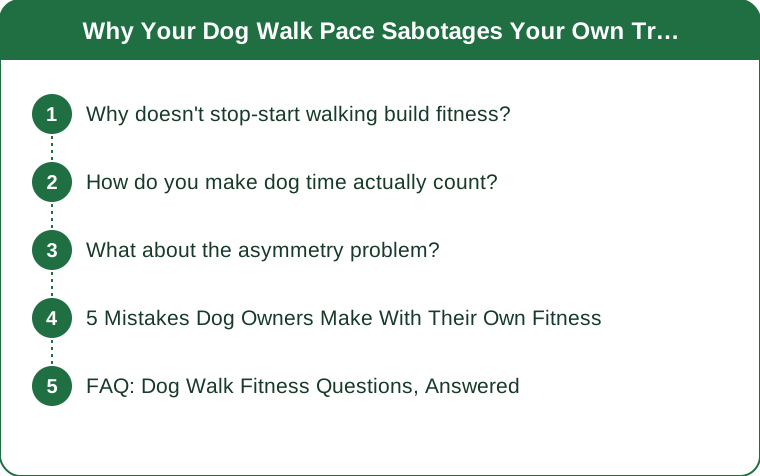
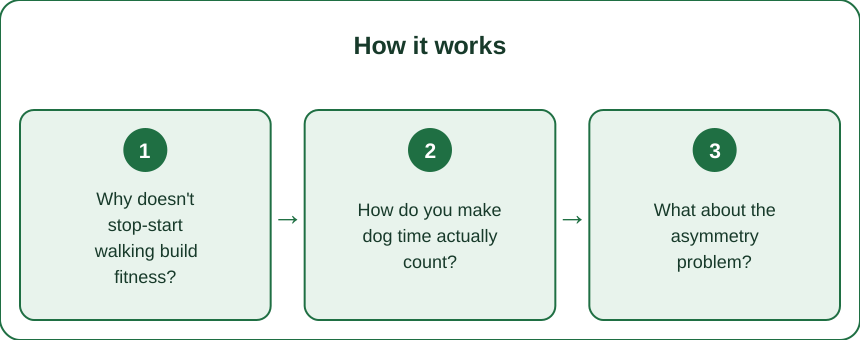
Why doesn’t stop-start walking build fitness?
Because the intensity never accumulates.
Heart rate needs time to climb and stay there. It takes two to three minutes of continuous effort to reach a steady training zone. A stop at minute two resets that clock.
Adaptation follows sustained stimulus. The cardiovascular changes people want come from time spent in the zone, and interruptions reset the accumulation.
Dog-led pace is far below training pace. A typical dog walk averages 3 to 4 km/h including stops. A training walk is 5.5 to 6.5 km/h continuously.
The volume masks the problem. Ninety daily minutes feels like it should count for something, and it does count for general health — just not for fitness improvement.
Habituation flattens it further. Whatever stimulus existed at the start becomes routine within weeks, and the body adapts to that specific low demand.
And there is no progression. The route, the pace and the duration are the same every day. Nothing about that structure asks the body to change.
How do you make dog time actually count?
The key insight is that the dog’s walk and your walk are different activities.
Split the walk. Twenty minutes of continuous brisk pace at the start, then let the dog sniff for the remainder. The dog gets its enrichment; you get your block.
Use the first section for pace. Dogs are typically most eager at the start, which is exactly when a fast continuous section is easiest to hold.
Add hills rather than distance. A hill loop raises intensity without needing continuous flat pace, and dogs stop less on inclines.
Try intervals between landmarks. Fast to the third lamp post, easy to the next. It works with a dog’s natural rhythm rather than against it.
Add load with a weighted vest, not the lead. A 4 to 7kg vest raises the intensity of the same route considerably. Never add load via the lead — that is a shoulder problem waiting to happen.
Attach a strength circuit at the end. Ten minutes of squats, lunges and push-ups at the park turns a walk into a session, and the dog is happy to wait.
What about the asymmetry problem?
This is the injury issue nobody warns new dog owners about.
Lead pulling loads one side, constantly. A dog that pulls applies repeated force to one shoulder and one side of the trunk for the entire walk, every day.
The load is unpredictable and sudden. Sharp lunges toward a squirrel are impact forces the shoulder cannot brace for, and it is the sudden ones that cause trouble.
It creates real asymmetry over months. Shoulder, neck and lower-back complaints in dog owners commonly appear on the lead side.
Swap hands regularly. Every five minutes, or every landmark. This one habit prevents most of it and costs nothing.
A hands-free waist lead distributes the load through the hips, which handle it far better than a single shoulder.
Train the pulling, ultimately. Loose-lead training is the actual fix, and it is worth the six weeks it takes.
Autumn note: darker mornings and wet leaves are arriving, and this is when sudden lead-pull incidents on slippery ground cause the most injuries. A waist lead and a headtorch matter more from September onward than any training tweak.
5 Mistakes Dog Owners Make With Their Own Fitness
Counting dog walk minutes as training minutes. They are excellent for general health and near-useless as a training stimulus. Both things are true.
Never varying the route. Same route, same pace, same result. Two different routes with different terrain is a free upgrade.
Always holding the lead in the same hand. The most common cause of one-sided shoulder and neck complaints in daily walkers.
Skipping their own session because they already walked. The walk is not a substitute for strength work, and strength is what changes how you feel at 50.
Letting the dog set the pace throughout. The dog’s priority is sniffing. Yours is not. Split the walk and both of you get what you need.
And the one people resist: walking a dog is not a recovery walk either. Stop-start walking with unpredictable pulls is more stressful on tissue than a smooth continuous walk, so it does not serve that purpose well either.
FAQ: Dog Walk Fitness Questions, Answered
Do dog walks count toward the weekly activity guidelines?
Brisk continuous sections do. Sniff-paced walking counts as light activity, which is genuinely valuable but sits below the moderate-intensity threshold.
How fast is brisk enough?
Around 5.5 to 6.5 km/h — a pace where you can talk but not sing comfortably.
Can my dog handle interval training?
Most healthy adult dogs enjoy it. Avoid it with puppies, brachycephalic breeds, senior dogs, and in heat. Check with a vet if unsure.
Is a weighted vest safe for daily walking?
Start at around 5 percent of bodyweight and build gradually. Avoid it if you have back or knee issues.
How do I stop my shoulder hurting after walks?
Swap hands regularly, use a waist lead, and address the pulling. In that order of immediacy.
Should I run with my dog instead?
If the breed and age suit it, running solves the continuity problem entirely. Build the dog up as gradually as you would build yourself.
This is general information, not medical or veterinary advice.
TL;DR:
- Stop-start walking never reaches the 20 continuous minutes at 60 to 70 percent max heart rate that drives adaptation.
- Split the walk: 20 minutes brisk first, sniff time after. Both of you get what you need.
- Add intensity with hills, landmark intervals or a weighted vest — not more minutes.
- Swap lead hands and consider a waist lead; one-sided pulling is the main injury risk.
- Dog walks are excellent general health activity and a poor training stimulus. Both are true.
Tomorrow, walk the first twenty minutes at your pace before the dog gets to sniff. That single change is the whole intervention.
Keep Reading
This article is for general informational and styling purposes only. Fit, sizing, and product availability may vary.