Why Cool Mornings Change Your Puppy Walk — and What to Wear
Quick Answer: Dogs are far more active in cool weather, so your morning walk gets longer and faster without you deciding to change anything. Your effort goes up mid-walk while the air stays cold at the start — which means you need a layer you can actually remove one-handed, not a warmer jacket.
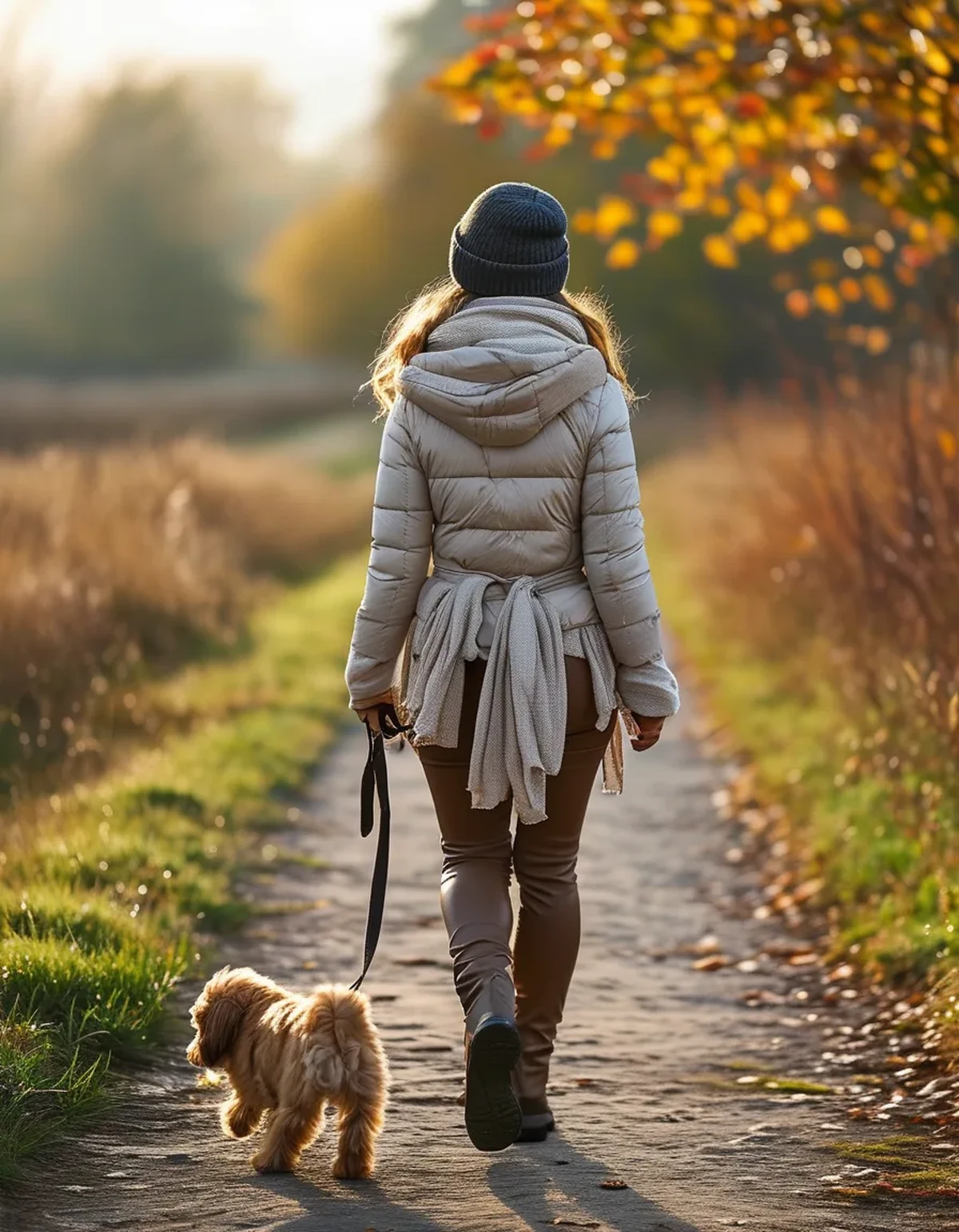
The first cool week is when your puppy becomes a different animal. The walk that took twenty minutes takes thirty-five, they pull more, they sniff more, and you get home overheated in the jacket you needed at the door.
Why does your dog get so much more energetic?
Because dogs manage heat far less efficiently than we do, and summer was limiting them.
Dogs have very few functional sweat glands and rely mostly on panting to shed heat. That works, but it is far less efficient than human sweating, and it is why summer walks are shorter, slower, and more shade-hunting. Take twenty degrees off the morning and the same dog can suddenly sustain much more activity before overheating.
Puppies show this most dramatically, because their energy was never the limiting factor — the temperature was. Remove the limiter and you get the full amount.
The practical consequences:
- Walk duration goes up without a conscious decision, often by 30 to 50 percent
- Pace goes up, particularly in the first ten minutes
- Pulling increases, because arousal is higher and the environment smells better in cool damp air
- Recall gets worse for the same reason
So your morning walk quietly turned into a moderate workout, and you are dressed for standing outside.
Why is the temperature problem harder than a normal walk?
Because you have a large effort change midway and no free hands.
On a normal walk your effort is roughly constant. On a puppy walk in fall, you start standing still at the door in cold air, spend ten minutes at a brisk pace, then five minutes standing still while they investigate something, then a fast section, then standing still again.
Intermittent effort in cold air is the hardest thing to dress for, harder than steady cold or steady effort, because you cycle between generating heat and losing it every few minutes.
Add the practical constraints:
- One hand is holding a leash, permanently
- The other is holding bags, a phone, or a treat pouch
- Anything you take off you have to carry, and you already have no hands
- You cannot easily stop and reorganize while an eight-month-old dog is trying to leave
Which means the usual advice — layer up and adjust as you go — is only useful if the adjusting takes one hand and three seconds.
What actually works to wear?
One-handed layers, and things that live on your body rather than in your hands.
The base: a long-sleeve top you are happy to be in for the whole walk. This is what you will end up wearing by minute fifteen, so it should be the right weight for moving, not for standing.
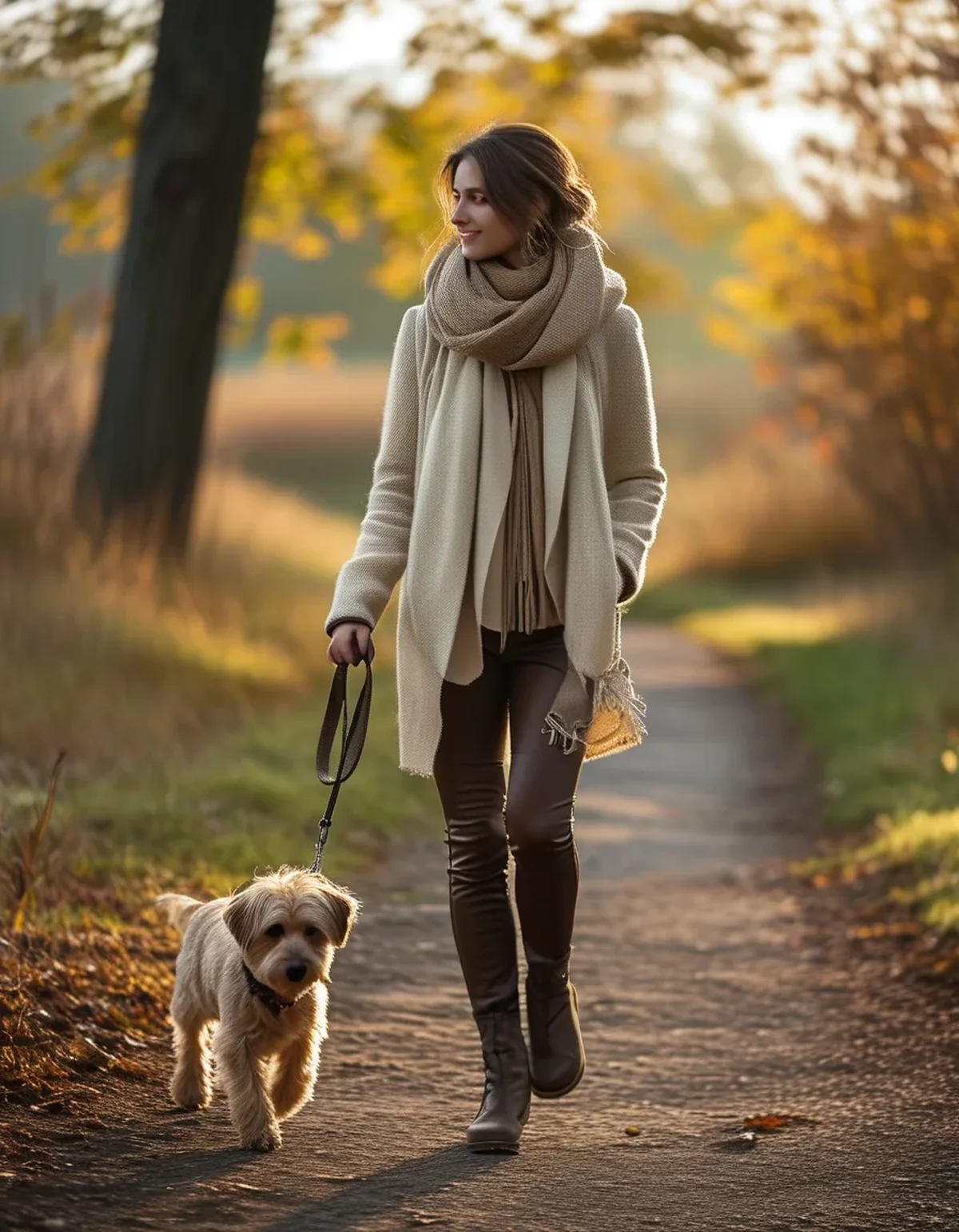
The removable layer — the important one: a full-zip rather than a pullover, every time. A full zip can be opened progressively with one hand, which is most of the temperature management you actually need. You may never take it off at all, which is the goal.
The carry solution: a jacket that ties around the waist or stuffs into its own pocket, or a small crossbody bag that can take a packed layer. The reason people end up too warm is not that they lack layers, it is that they have nowhere to put one.
Bottoms: full-length leggings from the first cool week. Legs are the last thing you need to adjust and the first thing that feels cold while standing.
The two accessories that punch above their weight: a thin beanie and light gloves. Both are tiny, both fit in a pocket, and both are removable one-handed. On a 50-degree morning, gloves make more difference than a heavier coat, because your hands are out in the air holding a leash and nothing else is.
5 Mistakes Everyone Makes on the First Cool Walks
-
Dressing for the doorstep. The first two minutes are the coldest you will feel and the least representative. Dress for minute ten, and accept being slightly cold at the start.
-
Wearing a pullover. No zip means no adjustment, which means overheating or turning back. This is the single most common outfit error of the season.
-
Forgetting that your dog’s fitness jumped too. They can suddenly do more, so the walk gets longer — but a puppy’s joints are still developing, and a big sudden increase in duration is worth building gradually rather than letting the weather decide.
-
Leaving the gloves at home because it is not that cold. Your hands are the only part of you exposed and stationary. This is the one people learn in week three, having been cold for three weeks.
-
Keeping the summer shoes. Wet grass and heavy dew arrive with the cool mornings, and canvas shoes soak through in ten minutes. Cold wet feet outlast the walk by about two hours.
What about the dog’s side of it?
A few things change for them too, and they affect what you carry.
- Water still matters, even though they seem less thirsty. Longer walks mean more total output regardless of temperature
- Paws pick up more. Wet ground, mud, and eventually salt. A small towel by the door saves your floors and your patience
- Dew and wet grass mean a wetter dog, so a car seat cover earns its place from about now if you drive to walks
- Visibility drops. Sunrise is getting noticeably later, and by late September a 6:30am walk is a dark walk. A light collar or clip-on light for them and something reflective on you are worth sorting before you need them, not after
- Short-coated and small dogs feel the cold meaningfully sooner than you do, and a coat is not a vanity item for them
The general shape of the season: the next six weeks are the best walking weather of the entire year. Cool enough for the dog to go properly, warm enough that neither of you needs much gear. It is worth setting the outfit up properly now, because this is the stretch you will get the most out of.
FAQ: Cool-Weather Dog Walk Questions, Answered
How much longer should the walks actually get?
Let your dog’s energy guide it, but increase gradually rather than jumping straight to what they seem capable of. For puppies especially, a common guideline is a modest amount of structured walking per month of age, and a sudden weather-driven doubling is worth easing into over a couple of weeks.
Do I need waterproof or just water-resistant?
Water-resistant is enough for dew and drizzle, which is most of what fall delivers. Fully waterproof shells trap moisture during the fast sections, which on an intermittent-effort walk usually makes you damper rather than drier.
My dog pulls much more now. Is that the weather?
Partly, yes — cooler air holds scent better and arousal is higher. It is also a good reason to keep training consistent through the season change rather than assuming a regression. The environment got more interesting; the dog did not get worse.
TL;DR:
- Cool weather removes your dog’s heat limiter, so walks get longer and faster on their own
- Intermittent effort in cold air is the hardest thing to dress for — you need adjustment, not warmth
- A full-zip layer, a way to carry it, a thin beanie and light gloves solve nearly all of it
- Build up walk duration gradually, sort visibility before the mornings get dark, and swap the canvas shoes
The next six weeks are the best walking weather you will get all year. Spend ten minutes on the outfit now and you get to enjoy all of it instead of turning back at the corner.
Keep Reading
This article is for general informational and styling purposes only. Fit, sizing, and product availability may vary.