Why a Puppy That Pulls Changes Which Muscles Your Walk Trains
Quick Answer: A pulling dog applies a constant sideways and forward force through one arm, so your trunk muscles work continuously to resist rotation while your legs do far less than they would on a free walk. You end up training anti-rotation on one side - unequally - instead of getting the steady bilateral leg and cardiovascular work a walk normally provides. The ache in your shoulder and one hip is the actual workout you did.
Here is what is being loaded, why it is one-sided, and how to get a walk back.
What is your body actually doing against a pulling dog?
More work than you would think, in the wrong places.
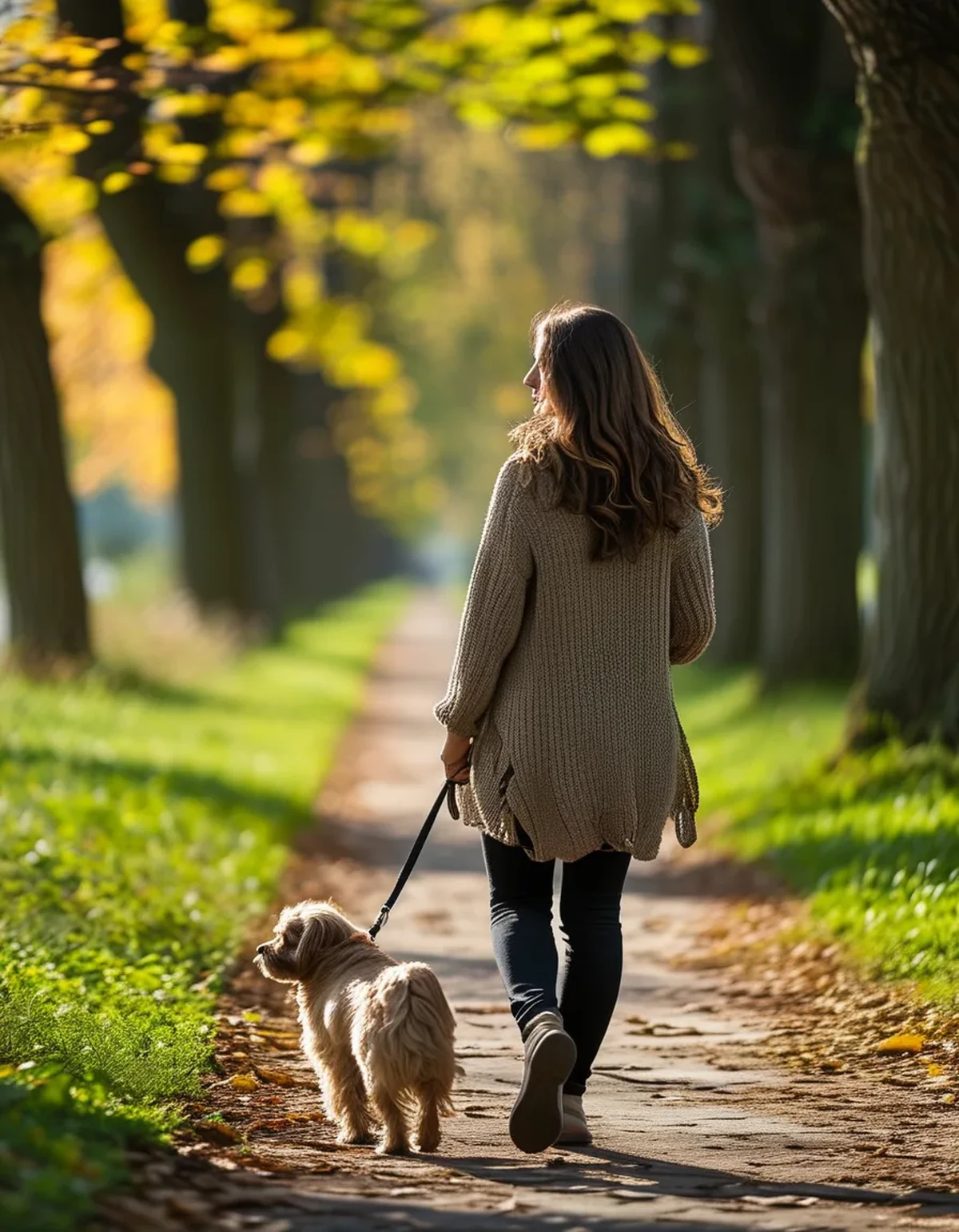
The lead applies a continuous off-centre force. Held in one hand, that force pulls you forward and to one side. Your trunk has to generate an opposing rotational force constantly to keep you walking in a straight line.
That is anti-rotation work, and it is genuinely demanding. The obliques, quadratus lumborum, and deep trunk muscles on one side work isometrically for the length of the walk. This is a real training stimulus - it is just entirely one-sided.
Your shoulder and arm hold a sustained isometric grip and pull. The upper trapezius, rhomboids, and forearm flexors work continuously on one side. Sustained isometric loading with restricted blood flow is what produces the specific aching quality people describe after a walk with a puller.
Meanwhile your legs do less. Being towed reduces the propulsive work your legs contribute - you are partly being pulled rather than pushing. The cardiovascular stimulus drops too, because the pace is set by stopping and starting rather than by steady movement.
And the gait itself changes. Leaning back against a pull shifts your weight and alters your stride, which loads one hip differently from the other. This is where the one-sided hip tightness comes from, and it accumulates over months of daily walks.
Why does it show up so unevenly?
Because almost nobody switches sides.
Most people hold the lead in the same hand every single walk. Habit, handedness, or road position. Over months, that is thousands of repetitions of an asymmetric load applied to one side of the body.
The trunk adapts asymmetrically. One side gets consistently more anti-rotation work than the other. This is not automatically harmful - but it is unbalanced training, and it tends to show up as one-sided tightness rather than as strength.
The shoulder on the lead side sits differently. A sustained downward and forward pull encourages a slightly elevated, protracted shoulder position, which is the same position desk work produces. The two stack.
And a stopping-and-starting walk has a specific cost. Sudden decelerations against a pull are brief high-force events, quite different from the steady low load of a normal walk. Those spikes are where sudden shoulder and wrist strains come from - a genuinely common injury among dog owners.
The seasonal note that matters right now: cooler autumn mornings make many dogs more energetic and more distractible - more scents, more wildlife, more pulling. A walk that had settled over a hot summer often regresses as the weather turns, which surprises people who assume the training was finished.
What Nobody Tells You About Dog Walks as Exercise
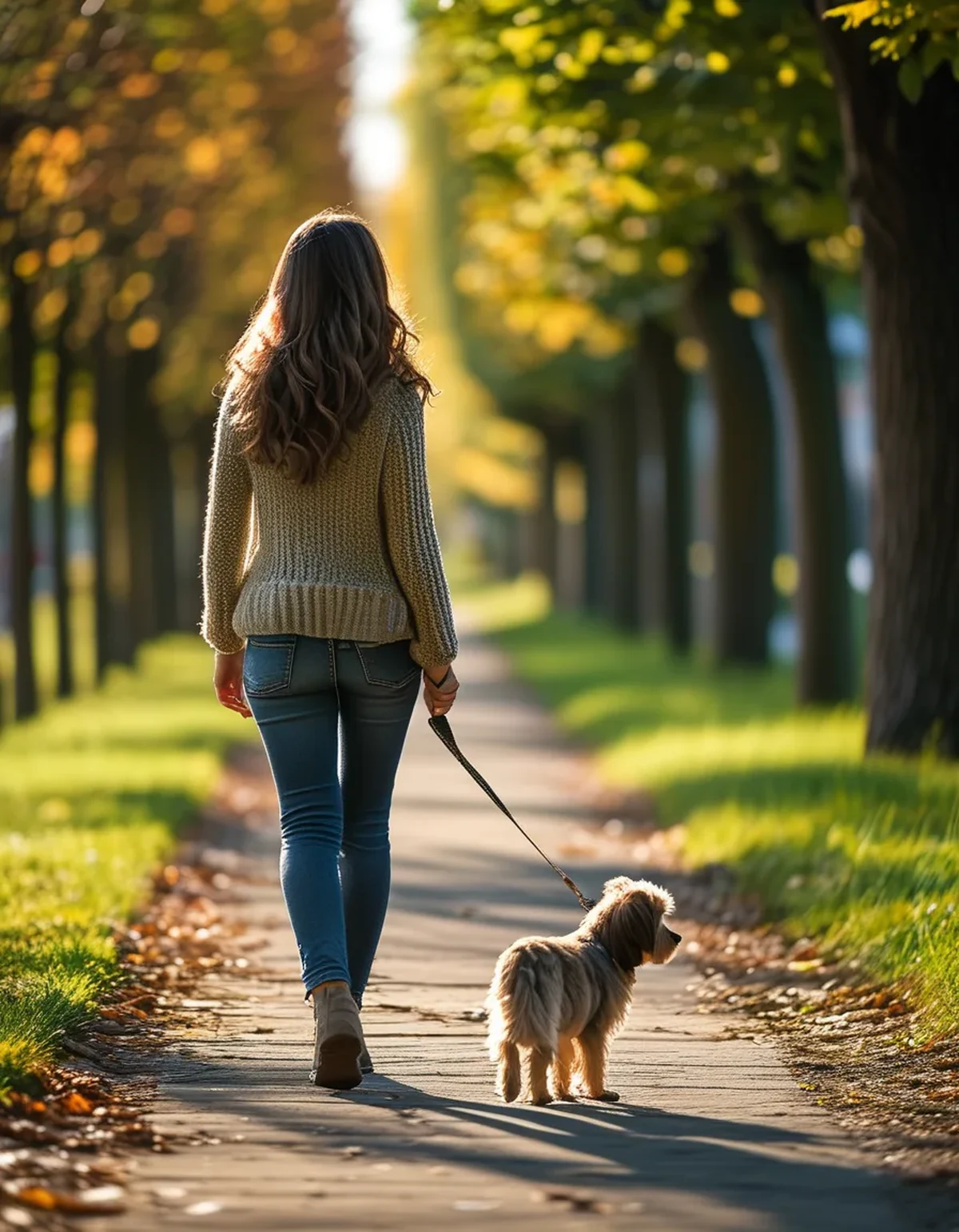
A dog walk is usually not the workout you think it is. Stopping frequently, walking below your natural pace, and being partly towed means the cardiovascular and leg stimulus is much lower than the duration suggests. An hour of puppy walking is not an hour of walking.
But it is not nothing either. The trunk and grip work is real. It is simply unbalanced and not the thing you were trying to train - which is the actual problem, rather than a lack of effort.
Retractable leads make it worse in a specific way. The constant light tension trains the dog to pull and gives you a continuous low-level load with no clear feedback. They also cause a disproportionate share of hand and finger injuries when a dog bolts.
A cross-body lead is not automatically better. It frees your hands, which is genuinely useful, but it transmits the pulling force directly into your trunk and low back, and a sudden lunge is transmitted rather than absorbed by your arm. Better for a settled dog, worse for a strong puller.
Equipment changes the physics substantially. A front-clip harness redirects the dog’s forward force sideways, which makes pulling much less effective for the dog and much easier for you to counter. It is a mechanical change, not a training one - which is why it works immediately while training takes weeks.
And the honest one: training the dog is the actual fix. No amount of core strength on your side solves a pulling problem. Loose-lead training is the intervention with the largest effect on your body, and it is worth treating as such rather than as a separate project.
The one that surprises people: your own posture affects the dog. Leaning back and bracing against a pull creates constant tension on the lead, which many dogs interpret as something to pull against - the opposition reflex. Softening your arm often reduces pulling on its own.
How do you get a walk back?
Five changes, from immediate to longer-term.
1. Switch sides every walk, or at every landmark. The single easiest change. Alternate which hand holds the lead and the asymmetry stops accumulating. Set a rule - swap at every road crossing - so it happens without thinking.
2. Use a front-clip or well-fitted harness. This changes the mechanics immediately. A front attachment turns forward pulling into a sideways redirect, reducing the force reaching your shoulder substantially.
3. Keep your elbow bent and close to your body. A straight arm out in front is the weakest position and puts the load on the shoulder joint. A bent elbow near your ribs lets your trunk absorb the force and is far more comfortable over an hour.
4. Separate the dog walk from your own walk. This is the most useful reframe. The dog walk is for the dog; your walk is for you. Fifteen minutes of uninterrupted walking at your own pace, either before or after, gives you the training stimulus the dog walk does not.
5. Train loose-lead walking properly. Stop when the lead goes tight, move when it loosens. Consistency matters far more than duration - five minutes of consistent practice beats an hour of inconsistent walking, and inconsistent practice actively teaches pulling.
And two things for your own body:
Do some anti-rotation work on the non-lead side. Pallof presses or single-arm carries on the opposite side balance what the walks are building.
Stretch the lead-side shoulder and the opposite hip. These are the two areas that reliably tighten, and two minutes after the walk while you are still warm is enough.
This is general information, not medical advice. Persistent shoulder, elbow, wrist, or low back pain warrants assessment - and if a dog’s pulling is strong enough to unbalance you, a qualified force-free trainer is the right investment, both for the dog and for your body.
FAQ: Dog Walking and Your Body, Answered
Why does my shoulder hurt after walking the dog but not after running?
Sustained isometric loading. Holding a pulling dog means your shoulder and forearm muscles contract continuously with restricted blood flow, which produces a specific aching fatigue that dynamic exercise does not.
Is a dog walk actually good exercise for me?
Less than the duration suggests. Frequent stopping, a slower pace, and being partly towed all reduce the leg and cardiovascular stimulus. The trunk and grip work is real, but it is one-sided.
Should I switch which hand holds the lead?
Yes, and it is the easiest fix available. Most people use the same hand every walk, which means thousands of repetitions of an asymmetric load over months.
Are cross-body leads better?
For a settled dog, often yes - they free your hands. For a strong puller, they transmit sudden lunges straight into your trunk and low back instead of letting your arm absorb them.
Does a front-clip harness really help?
It changes the mechanics rather than the behaviour - forward pulling gets redirected sideways, so it is less effective for the dog and easier for you to counter. That is why it works immediately, unlike training.
Why did my dog start pulling again this autumn?
Cooler weather makes many dogs more energetic and more distractible, with more scents and wildlife around. A walk that settled over a hot summer commonly regresses as the season turns.
How do I get my own walk in?
Separate them. Treat the dog walk as the dog’s, and add fifteen minutes of uninterrupted walking at your own pace before or after. It is a small addition and it is the part that actually trains you.
TL;DR:
- A pulling dog applies constant off-centre force, so your trunk does continuous one-sided anti-rotation work while your legs do less.
- The shoulder ache comes from sustained isometric loading with restricted blood flow - a different fatigue from dynamic exercise.
- It shows up unevenly because almost nobody switches which hand holds the lead, so the asymmetry accumulates over months.
- An hour of puppy walking is not an hour of walking - the cardiovascular and leg stimulus is much lower than the duration suggests.
- Fixes: switch sides every walk, use a front-clip harness, keep your elbow bent and close to your ribs.
- Separate the dog walk from your walk. Fifteen uninterrupted minutes at your own pace is the part that trains you.
- Loose-lead training is the real solution; bracing against a pull creates tension the dog pulls against.
Cool autumn mornings make dogs more distractible - a walk that settled over summer often regresses now.
This is general information, not medical advice.
Keep Reading
This article is for general informational and styling purposes only. Fit, sizing, and product availability may vary.