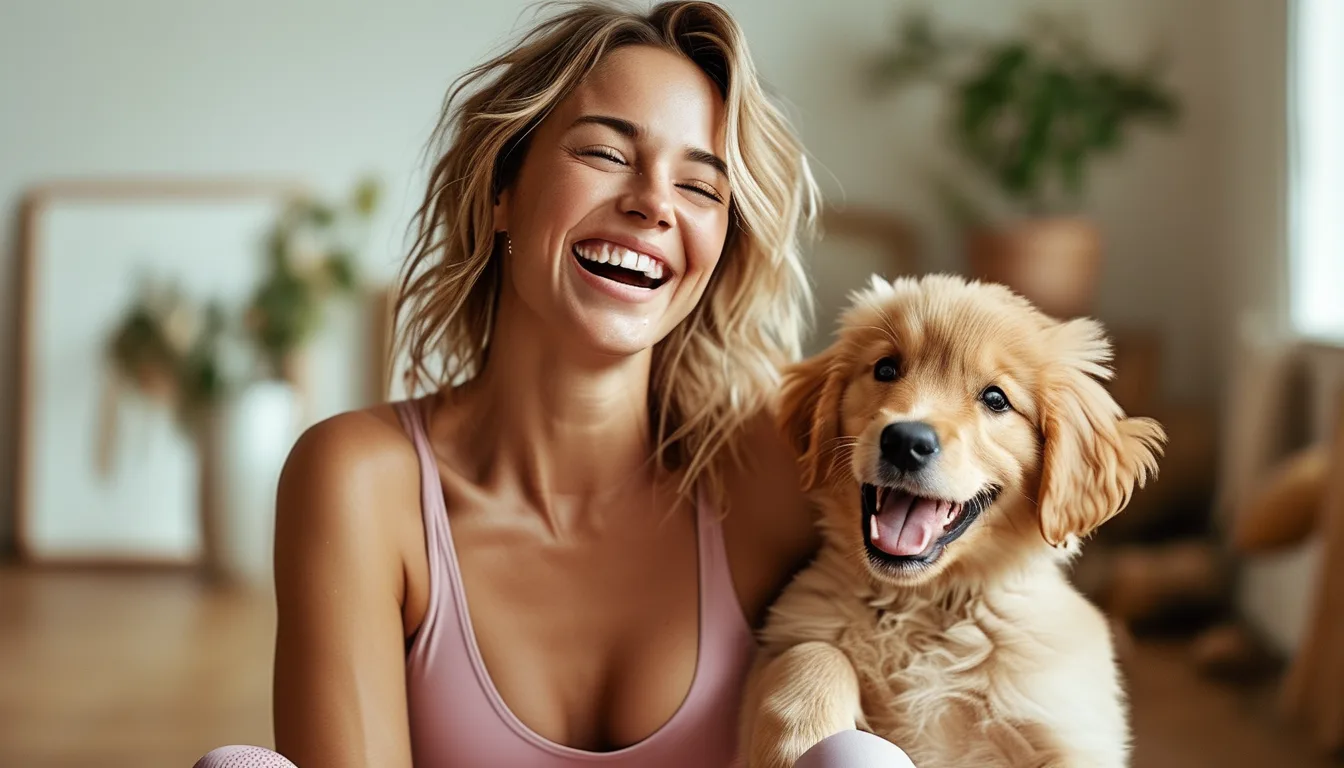
What to Actually Wear for a Walk That Turns Into a Workout Halfway Through
Quick Answer: A puppy walk alternates between standing still and short bursts of fast movement, which means your body cycles between cooling down and heating up repeatedly — so a single-temperature outfit will be wrong half the time. A light layer you can open, secure pockets you can reach one-handed, and a fabric that handles both sweat and sudden stillness is the practical combination.
The standing-around portions are what most people underdress for, and they’re a bigger share of the walk than expected.
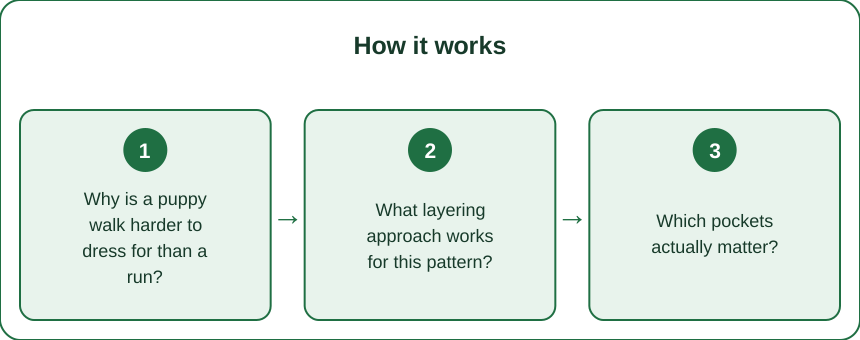
Why is a puppy walk harder to dress for than a run?
A run holds a steady effort level, so your body reaches a stable temperature and stays there. You can dress for that single state and be comfortable throughout.
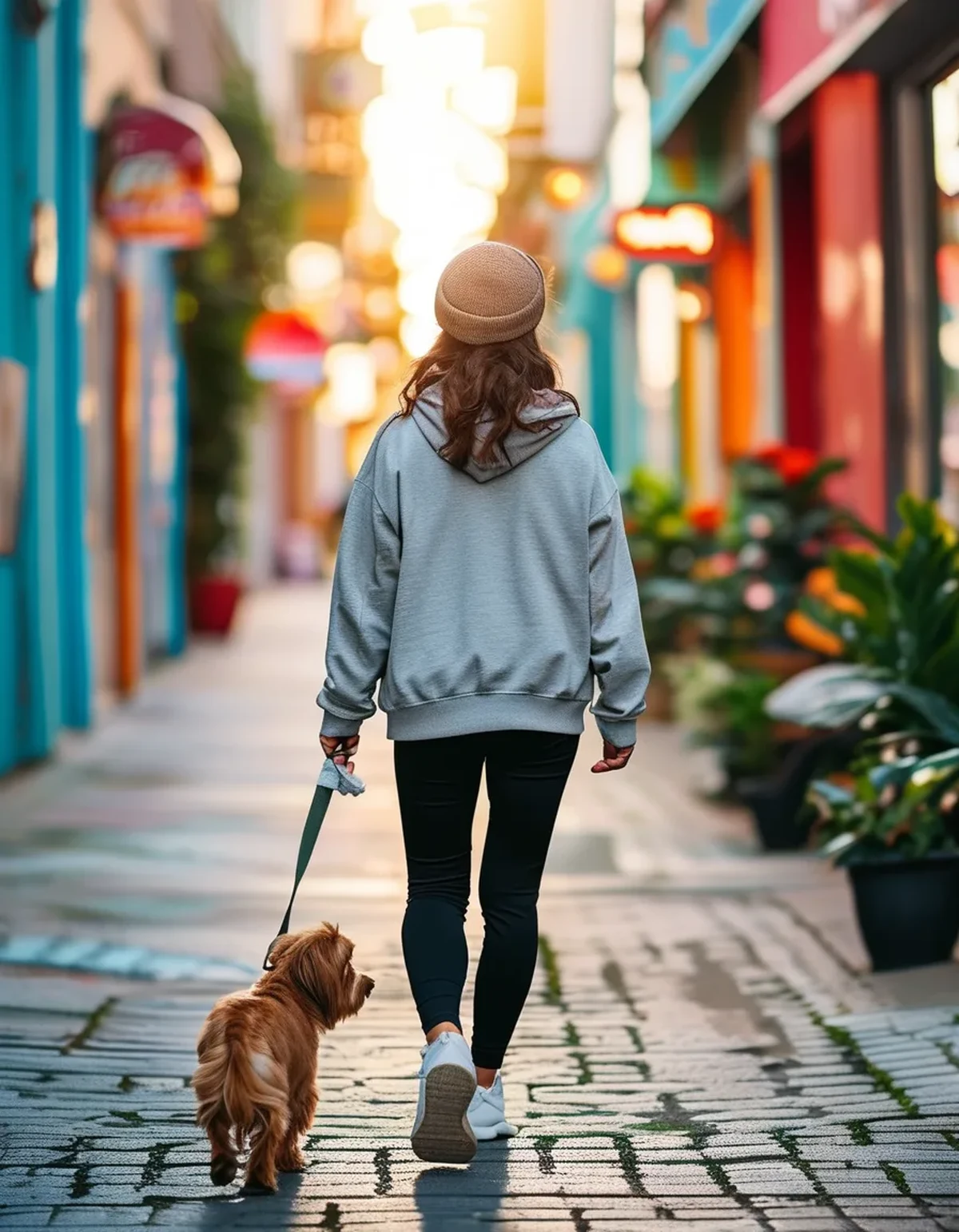
A puppy walk does the opposite — it alternates between near-zero effort while your puppy investigates something and short sprints when they decide to move. Each cycle raises your temperature and then lets it drop, sometimes several times in twenty minutes. The cooling phases are when you get cold, and they’re often longer than the active phases, which is why people who dress for the active portion end up uncomfortable.
What layering approach works for this pattern?
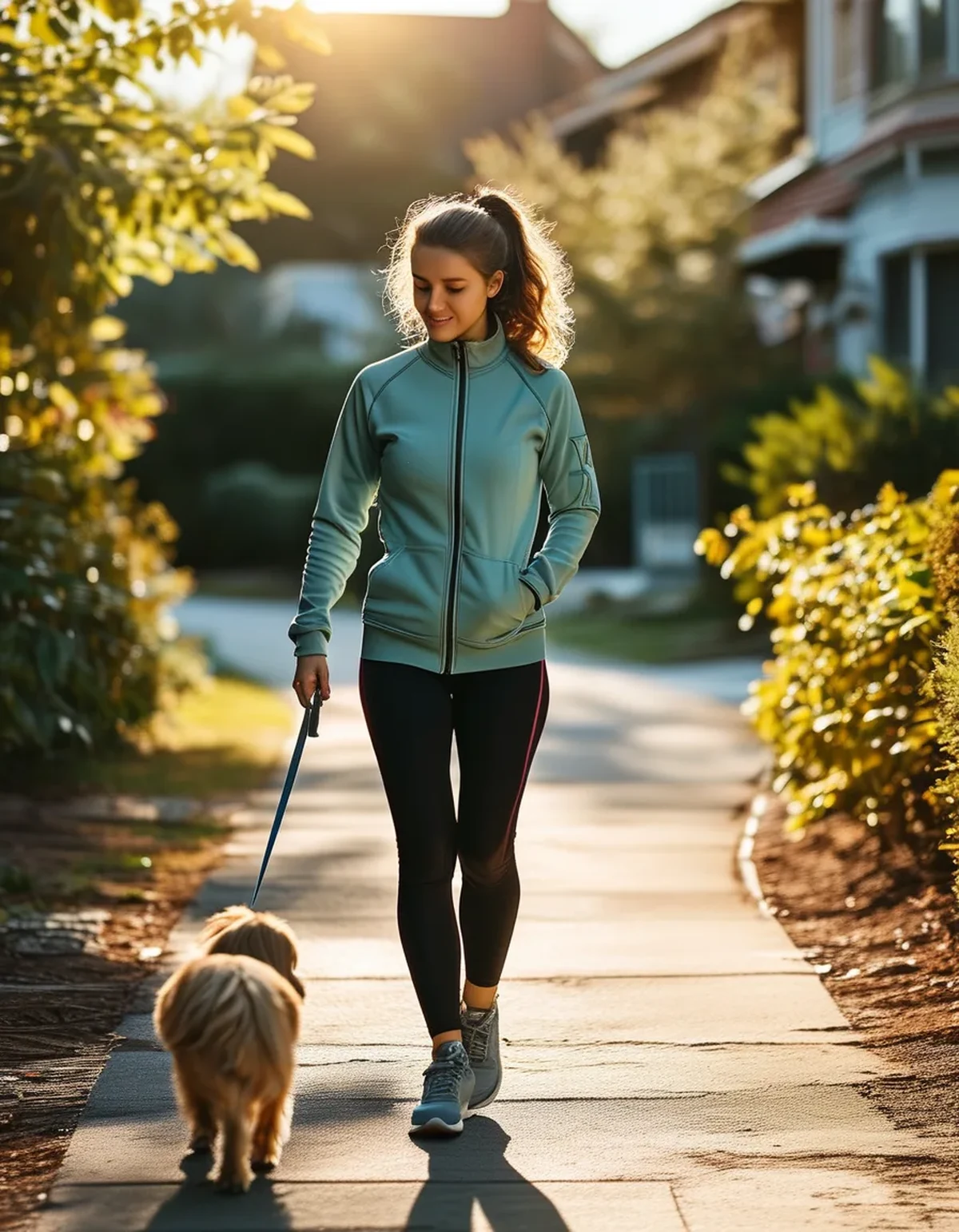
A base layer that handles sweat plus a light outer layer you can open and close without removing is the core of it. Opening a zip during an active burst and closing it during a stop is far more responsive than taking a layer off and putting it back on, especially with a leash in one hand.
A half-zip or full-zip in a light knit is the most practical outer piece for this window. Avoid anything you’d need two hands or a stop to manage. And in late summer specifically, the outer layer can be genuinely thin — its job is to trap a little air during the still phases, not to provide real warmth.
Which pockets actually matter?
Three things need to be reachable one-handed: your phone, waste bags, and treats. That’s a genuine constraint most activewear isn’t designed around.
A wide waistband pocket handles the phone well and stays accessible with a leash in the other hand. A front thigh pocket works for waste bags since they’re light enough not to bounce. Treats are the awkward one — a small zip pocket or an external treat pouch keeps crumbs out of the fabric, which matters because treat residue in a pocket is genuinely hard to wash out and attracts attention from every dog you pass. Pocket closure matters more than usual here: an open pocket loses things during a sudden pull.
Does fabric choice change for dog walking specifically?
Two considerations that don’t apply to other activities. Fur adheres differently to different fabrics — smooth, tightly-knit synthetics shed fur easily, while brushed, fleecy, or textured surfaces grip it and need a lint roller.
And durability at the leg matters more than usual, since a puppy that jumps or mouths at your leg puts fabric under stress that no workout does. A denser knit resists snagging from claws far better than a lightweight one. This is the one activity where a mid-weight legging genuinely outperforms a premium lightweight pair — the failure mode isn’t wear, it’s a single snag.
5 Mistakes People Make Dressing for Puppy Walks
1. Dressing for the active portion only. The standing-still phases are longer and colder than they feel in advance.
2. Wearing brushed or fleecy fabric. It grips fur, and one walk can leave a garment needing a full lint-roll.
3. Using open pockets. A sudden pull on the leash is exactly when things fall out.
4. Choosing lightweight leggings. Claws snag light knits easily, and one snag ends a pair.
5. Forgetting about visibility. Walks in this season increasingly end after sunset — a reflective detail is worth having before you need it.
FAQ: Dog Walk Activewear Questions, Answered
Do darker colors hide fur better?
Depends on your dog — dark fabric hides dark fur and shows light fur dramatically. Mid-tone heathers are the most forgiving across both.
Is a leash belt or hands-free leash worth it?
For consistent walkers, yes — it frees both hands, which changes how much pocket access matters and makes layer adjustment much easier.
What’s the best way to get fur out of activewear?
A damp rubber glove works better than a lint roller on synthetics, and washing with a dryer-free routine avoids baking fur into the fabric.
TL;DR:
- Puppy walks alternate between standing and sprinting, so a single-temperature outfit is wrong half the time
- A light zip layer you can open one-handed beats removing and carrying a layer
- Phone, waste bags, and treats all need one-handed reachable pockets with closures
- Smooth tight knits shed fur and resist claw snags; brushed and lightweight fabrics do neither
Dress for the standing-around portion and the active bursts take care of themselves. It’s the opposite of how most people approach it.
See It in Motion
Seen here: High Waist 8” Yoga Shorts — shop similar styles on bubblelime.com
Keep Reading
This article is for general informational and styling purposes only. Fit, sizing, and product availability may vary.