Puppy Training Is a Leg Workout — Dress Like It Is
Quick Answer: Training a puppy means repeated deep squats, half-kneels, and fast crouches — often 50 to 100 a day during the early weeks. That demands a gusseted crotch (the number one failure point), four-way stretch, a waistband that does not slide when you drop down, and fabric heavy enough to stay opaque in a deep squat. Add a wipeable outer layer for treat residue and grass. Thin leggings and drawstring joggers are the two worst choices, for opposite reasons.
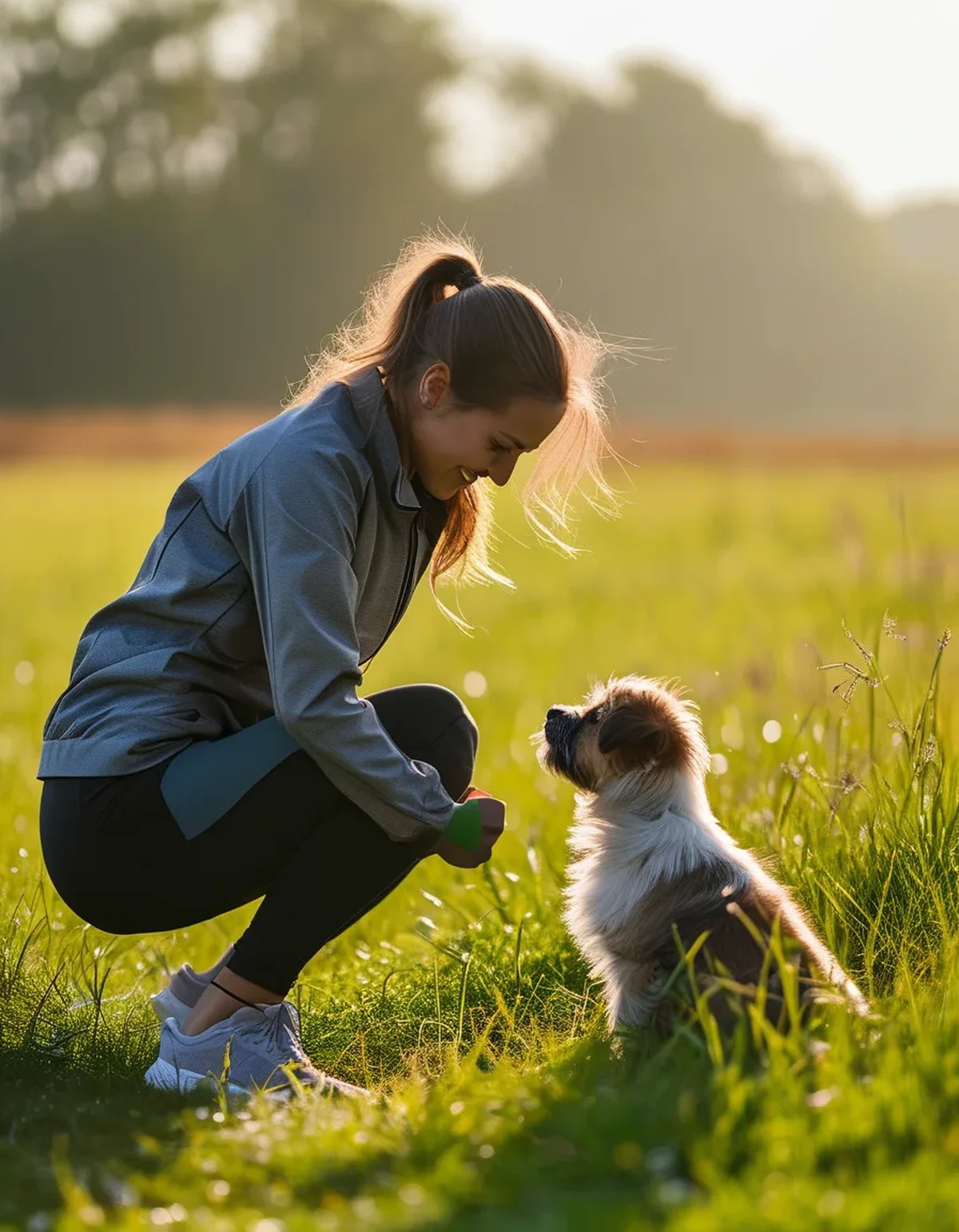
Why is puppy training harder on clothing than a workout?
Because it is unstructured, unplanned repetition. A gym session has a warm-up and a set count. Puppy training has you dropping into a crouch every time the puppy does the thing you want, which is frequent, sudden, and spread over hours.
The movements involved are also more varied than a workout’s. Deep squats to be at the puppy’s eye level. Half-kneels that put one knee down. Lunges to reach a treat drop. Fast direction changes when the puppy bolts. Every one of these loads the crotch seam and the waistband differently.
There is also a speed component. Reward timing matters enormously in early training — a treat delivered two seconds late teaches nothing. So you are not lowering yourself carefully; you are dropping fast, repeatedly, which is exactly the loading pattern that finds a weak seam.
And it happens outdoors and on floors: grass stains, mud, wet patios, and hardwood. Abrasion at the knee and seat is far higher than in a gym.
Add treat oil, drool, and the occasional accident, and this is genuinely one of the more demanding uses that activewear gets put to.
What construction survives it?
A gusset. Non-negotiable. The crotch is where repeated deep squats concentrate stress, and a four-seam junction is the most common failure point in exactly this use. Turn any pair inside out before buying and look for a diamond or triangular panel.
Four-way stretch. Two-way stretch resists the vertical extension that a deep squat requires, which both restricts you and strains the fabric.
A wide, high, non-slip waistband. Dropping into a crouch is the movement that pushes a waistband down. A wide band with real recovery stays; a narrow one migrates and you spend the day pulling it up.
240 gsm or heavier. Deep squats stretch fabric across the seat, and thin fabric goes sheer exactly there. Test in the fitting room with an actual full squat in front of a mirror — not a partial one.
Flatlock or bonded seams at the inseam, since the inner thigh is under repeated stress.
Durable, flat-face fabric. Puppy claws catch loops. A smooth, dense face resists snagging far better than any textured or brushed surface.
What fails: thin summer leggings (sheerness and seam blowouts), drawstring joggers (the knot presses into you every time you fold forward, and loose fabric catches on claws), and anything with a decorative cutout.
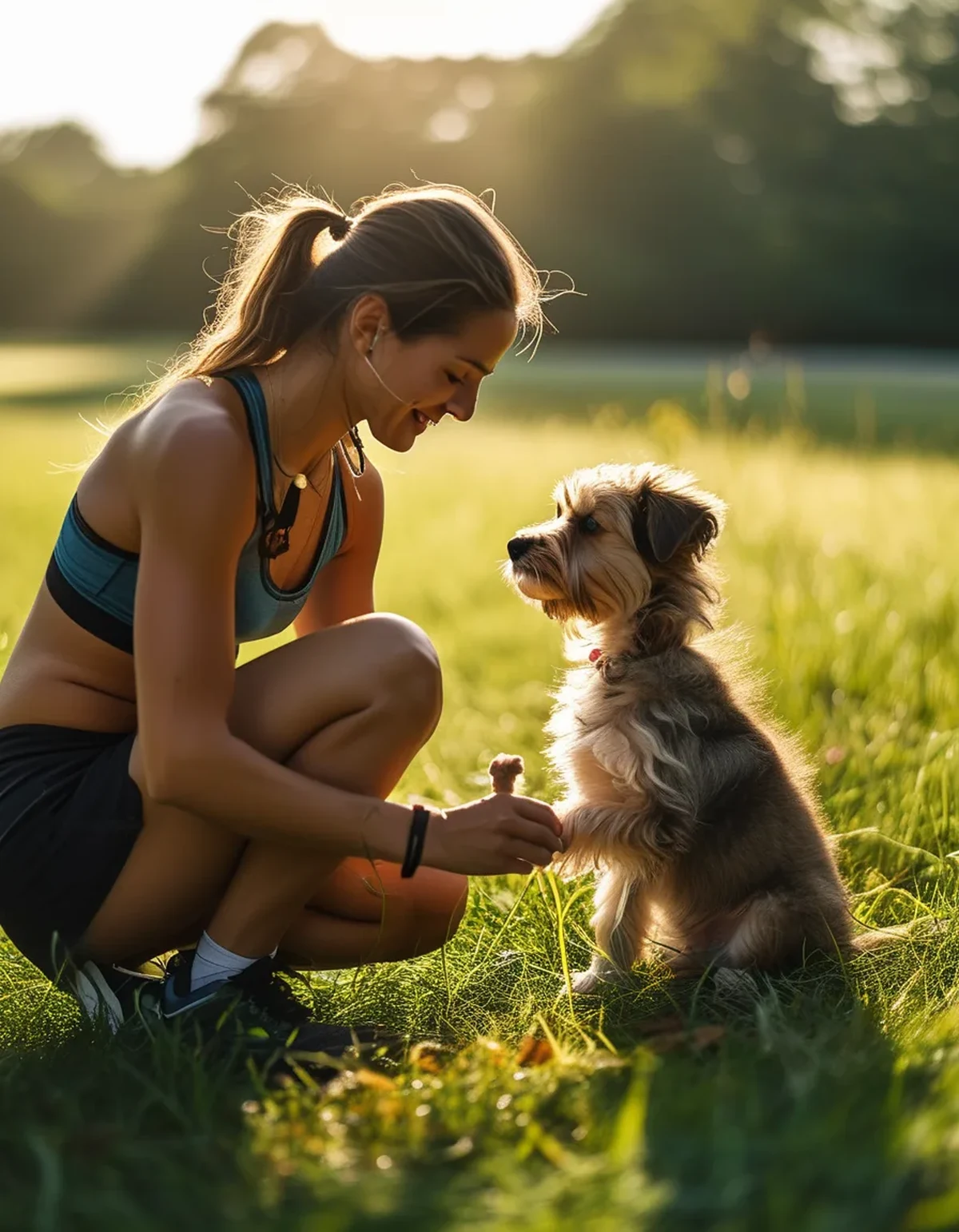
What should the outer layer do?
Take the mess so your base layer does not.
Treat oil, mud, drool, and grass all belong on something you can throw in the wash without thinking about it. A light zip jacket or a wipeable shell by the door serves this role, and it means your actual leggings and top stay clean through most sessions.
Pockets on the outer layer, not the base layer. Treats go in a pocket you can turn inside out. A clip-on treat pouch is even better — faster access for reward timing, and no residue in any garment.
A wipeable knee, if you are doing much floor work. Some training-oriented and hiking pants include a reinforced knee panel, which is worth having during the early weeks.
Sleeves you can push up for the inevitable cleanup. Cuffed or ruched sleeves stay where you put them; loose ones slide back down.
One thing to avoid: anything with dangling drawcords, toggles, or long zip pulls. A puppy in an exploratory phase will find every one of them, and the game of grabbing them is very hard to untrain once it starts.
Same logic applies to jewelry, loose hair ties on the wrist, and shoelaces you can leave untied.
5 Mistakes Everyone Makes During Puppy Training
1. Wearing your best leggings because you are only in the yard. The yard is where the mud and claws are. Designate a training rotation.
2. Skipping the deep squat test. A half-squat in a fitting room does not reveal sheerness or seam strain. Do a full squat, and check in a mirror.
3. Keeping treats in a pocket against skin. The oil transfers, stains, and holds odor through cold washes. Use a pouch or a sealed bag.
4. Wearing anything with a drawcord. It becomes a toy within a week, and teaching a puppy that clothing is not a tug target is much harder than just not offering one.
5. Ignoring the waistband because it feels fine standing. The crouch is where it slides. If it moves in the fitting room during one squat, it will move a hundred times a day at home.
FAQ: Puppy Training Clothing Questions, Answered
Are joggers or leggings better?
Leggings, generally — less loose fabric for claws to catch and no drawcord. Joggers work if they are fitted at the ankle, gusseted, and cordless, which describes technical training pants more than casual sweats.
How do I get treat oil out of activewear?
Treat it as a grease stain: a drop of dish soap worked into the spot before washing, then a cold wash. Do not dry until the mark is gone, since heat sets oil permanently.
What about puppy claws snagging fabric?
A tightly knit flat face resists snags best. Keep the puppy’s nails trimmed — it protects your clothing, your skin, and the puppy’s own comfort.
Does it matter what shoes I wear?
More than people expect. You are doing fast direction changes on grass and hard floors. A shoe with real lateral support and grip is safer than a slip-on, and laces should be tucked or double-knotted out of reach.
TL;DR:
- Puppy training is 50 to 100 deep squats and crouches a day — the crotch seam and waistband take the load.
- Require a gusset, four-way stretch, a wide non-slip waistband, and 240 gsm or heavier.
- Do a full squat in the fitting room and check opacity and waistband slide in a mirror.
- Put treats in a pouch or outer-layer pocket, never against skin.
- No drawcords, toggles, or dangling zip pulls — they become toys immediately.
The early weeks are short and intense. One well-chosen training rotation gets you through them without losing a favorite pair.
See It in Motion
Seen here: Yoga Jogger Sweatpants with Pockets — shop it on bubblelime.com
Keep Reading
This article is for general informational and styling purposes only. Fit, sizing, and product availability may vary.